In this new era, AI is taking over jobs and automating processes in seconds that used to take hours. From scheduling employees to tracking performance and even operating autonomous cleaning equipment, artificial intelligence is beginning to make its mark on the cleaning industry. But how much is AI actually changing the way cleaning companies operate, and how much of what we hear is simply hype? To understand where the industry is headed, it’s important to separate what AI is actually doing, what it isn’t doing, and what it may never do.
What AI Won’t Do
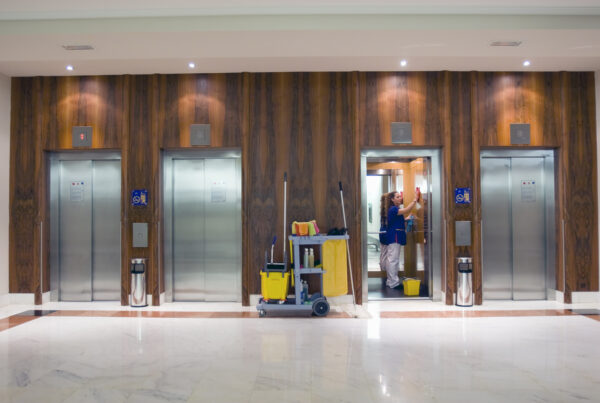
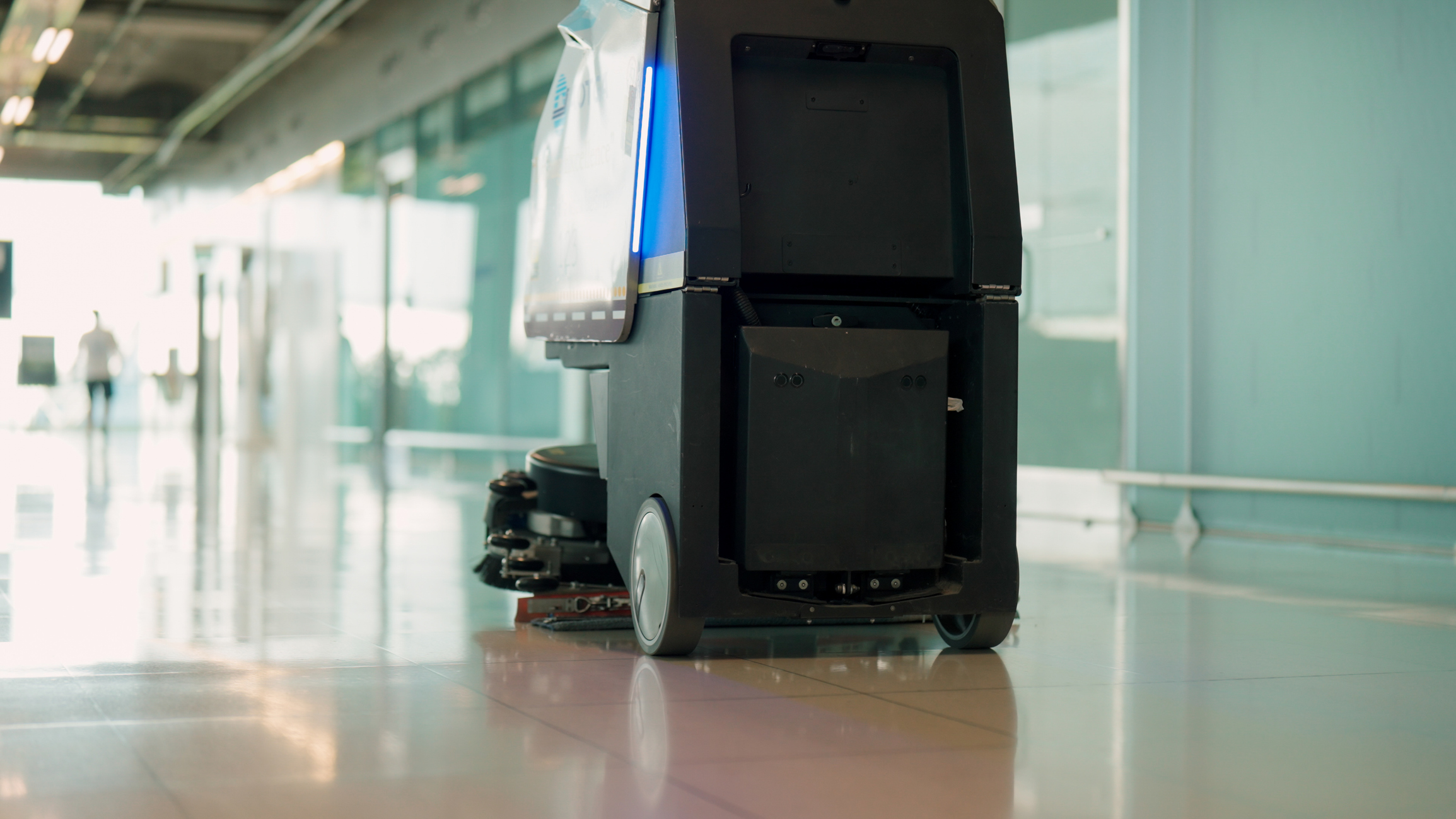
Even as AI rapidly advances, it is becoming increasingly clear that it cannot replace the essential role of cleaners. In fact, Jeff Cross, writing for ISSA, highlighted how many cleaning robots are quietly gathering dust in closets because companies purchased the technology before determining how to effectively integrate it into their operations (Cross, 2026). AI should be integrated into an existing cleaning program rather than used as the foundation for an entirely new one. When companies attempt to replace human labor entirely instead of using technology to supplement and enhance it, the result is often an ineffective program that fails to deliver (Cross, 2026).
Commercial cleaning companies need to understand their current programs and identify where inefficiencies exist before determining whether AI will actually benefit their specific operations. A robot that can cover large areas efficiently but simply drives over a dry spill is not solving the problem; it is only automating an ineffective process (Cross, 2026). Denise Williams, writing for WFBSC, the global network for building services, explains that the increased use of AI is actually creating a greater need for human intervention, particularly in proactive planning, oversight, and supervision. Successfully integrating AI requires people who can monitor the technology, make decisions, and respond when it fails to perform as intended. Without proper human oversight, AI can be ineffective and, in some situations, potentially dangerous (Williams, 2026).
What AI Will Do
So, what role does AI play in the commercial cleaning space? The automation of menial tasks is one of the most significant ways AI is impacting the cleaning industry. Instead of requiring field operatives to spend their time and energy on physically demanding and repetitive tasks, AI and robotic technology can automate many of these processes (Williams, 2026). This can help address one of the biggest challenges businesses face in the cleaning industry, which is employee turnover. Rather than focusing on how to replace workers, companies can use AI to reduce the most repetitive and physically demanding aspects of their jobs while allowing employees to focus on developing more valuable skills. When properly trained to use AI tools and automation, cleaners can spend less time on monotonous tasks and more time performing the detailed work that clients are more likely to notice and value (Cross, 2026).
AI is also playing an increasingly important role on the administrative side of the janitorial industry. Harmony Trujillo, writing for BSCAI, outlines some of the biggest ways AI is impacting administrative operations. Instead of spending hours analyzing spreadsheets, drafting proposals, and preparing presentations, administrative teams can now use AI to automate many of these tasks. Processes that once took hours can now be completed in a matter of minutes. Automated scheduling and communication are another area where companies are utilizing AI. Rather than requiring supervisors to communicate directly with field operatives to address callouts, vacations, or other staffing shortages, automated systems can identify available employees and help fill these vacancies without requiring direct supervisor involvement (Trujillo, 2026). This raises an important question about what AI means for the future of the commercial cleaning industry.
Future Implications
So, what does this mean for the cleaning industry, and what are the next steps? The most important thing is to view AI as an assistant to existing operations rather than a replacement for them. AI should be used as a tool to improve the processes that are already in place, not as a reason to completely rebuild them. Instead of asking, “How can I replace my current program?” companies should be asking, “How can AI help me solve the existing problems in my program?” Companies that successfully integrate AI will be the ones that view it as an opportunity to improve their operations rather than a threat to their workforce.
Our Approach at Transcend
At Transcend, we place a strong emphasis on our field operatives because we understand the importance of the role they play in our company and in the success of our clients. We invest in their training, recognize and reward exceptional work, and continually look for ways to show our appreciation for everything they do. That commitment extends beyond the workplace as well. Recently, we held our first annual company picnic, where our office administration team had the opportunity to step away from their desks and serve a cookout to the field operatives who spend their days serving our clients. It was a simple gesture, but it reflects an important part of our culture. At Transcend, we believe the future of the industry is not about replacing people with technology. It is about using technology to empower our people, improve our operations, and ultimately provide a better experience for our clients.
References